

Trump sends steep checklist of U.S. calls for and preps for additional strikes as Iran claims ‘significant progress’ in nuclear talks
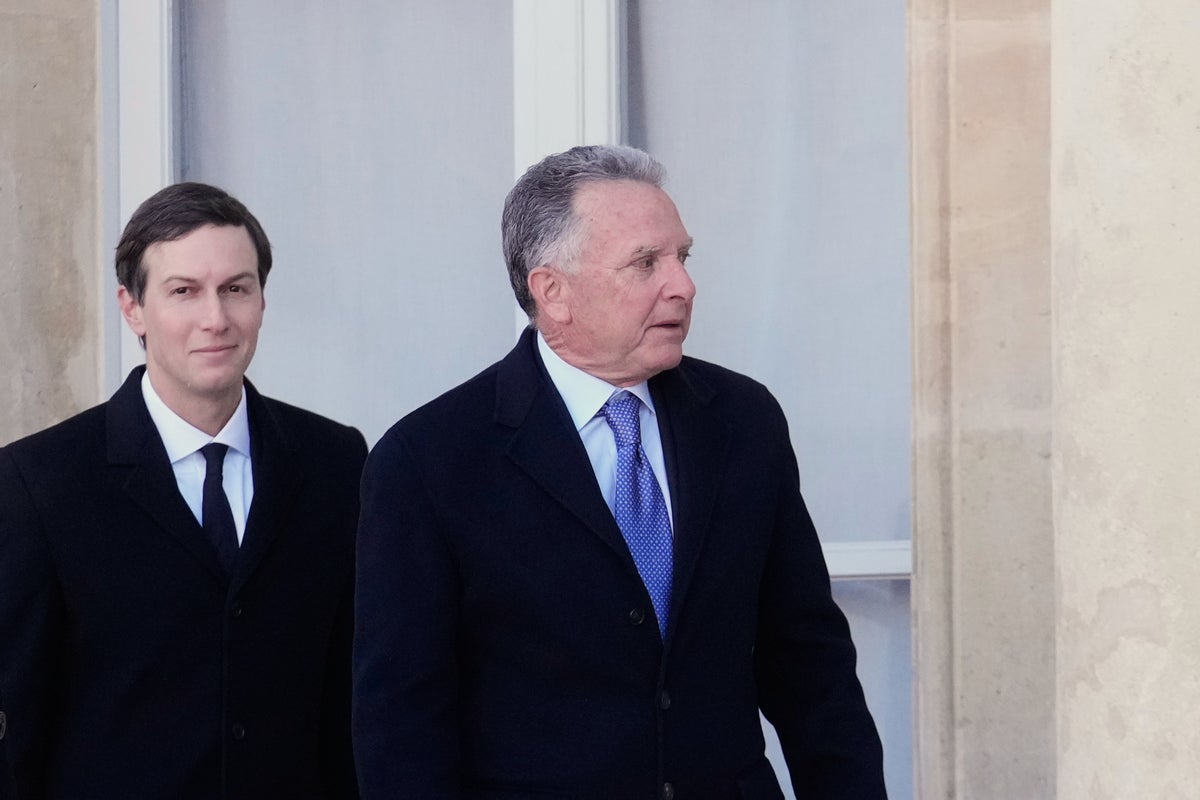
Donald Trump’s team of negotiators — reportedly armed with a laundry list of demands — was largely silent about the future of talks with Iran after emerging from a round of negotiations Thursday in Geneva.
A senior U.S. official described the outcome of Thursday’s talks as “positive” to Axios, while Iran’s foreign ministry described the two sides as making “significant progress”. But the extent to which the teams were able to overcome the real distance reported as the talks began was not known.
But they began with a report from The Wall Street Journal outlining a steep list of demands set forth by the Trump administration for a diplomatic resolution to the issue of Iran’s nuclear weapons program.
And the talks come just over a day after the president, in his State of the Union address Tuesday night, accused Iran of rebuilding the nuclear program that Trump’s own White House claimed was completely annihilated in the summer of last year. This week, his top negotiator, Steve Witkoff, claimed once again that the Iranian government could be just a week away from developing the enriched nuclear material required for making a bomb.
The demands cited by the Journal included the surrender of all Iranian enriched uranium to U.S. hands, zero enrichment capabilities for the foreseeable future, and the total destruction of the three Iranian nuclear development sites: Natanz, Isfahan and Fordow.
In exchange, the U.S. is promising future sanctions relief if Iran remains compliant with the deal. Negotiations are occurring under the looming pressure of the U.S. seemingly viewing them the last chance to stop U.S. military strikes against the country.
Despite the Iranian team stressing that more talks would take place in Vienna next week, there’s some signs that talks could break down before then. In particular, the reported “disappointment” of Witkoff and Kushner upon being presented with the Iranian offer, and a comment made by an Iranian official to an Al Jazeera reporter rejecting several of the U.S. demands out of hand.
Trita Parsi, co-founder of the Quincy Institute for Responsible Statecraft, predicted to The Independent that while the Iranian official claimed that Tehran would not accept permanent restrictions on enrichment or giving up enriched uranium, the heart of the issue remained the prospect of sanctions relief and the unwillingness of the Iranian side to trust members of the Trump administration who promise that loosening sanctions will ever occur if not done immediately.
“The problem is, the administration is not offering any real sanctions relief, and the Iranians need deep sanctions relief. Their only leverage for getting it is their nuclear program, so they’re going to bargain very hard in order to make sure that they get the right level of sanctions relief for whatever parts of the program, they give up,” said Parsi.
“If we’re offering them almost nothing, we’re saying that, you know, a lot of it will come much later and there’s zero trust between the two sides, then that’s just not going to work. The Iranians believe, frankly, that they are better off with a war than a deal like that,” said Parsi. “Why should they? There was a deal they were supposed to get sanctions relief and Trump himself, this President, not someone else, walked out of that deal.”
Trump could be inclined to give them that war.
Separately on Thursday, The New York Times reported that the administration is privately eyeing two strategies for armed conflict with Iran, in the event that talks do fail to satisfy the White House’s desire to put a permanent pin in Tehran’s nuclear ambitions. One involves limited strikes, in the vein of the attacks last summer, aimed at further disruption of Iran’s nuclear facilities. Another is a much wider operation aimed at targeting key facilities and officials with the intention of forcing the Ayatollah Khamenei from power altogether.
But U.S. officials who spoke to the outlet on background said that despite the U.S.’s large military buildup in the Mediterranean and Arabian seas, American forces are not prepared currently for any sustained operations lasting longer than about 10 days.
Public support for U.S. military intervention in Iran is very low, which the administration recognizes. Even as nearly 50 percent of Americans in an AP-NORC poll published Thursday viewed Iran’s nuclear weapons program as a serious threat, a higher percentage thought it unlikely that the president would “make the right decision” on Iran in the days ahead. 49% of Americans opposed initiating strikes on Iran in another recent poll.
Since the beginning of his second term the president has been torn between two prevailing schools of foreign policy thought in the GOP — the isolationism and non-interventionism of Steve Bannon and “America First” conservatives, and the more traditional neoconservative view that America’s might should be asserted at all times.
On the Hill, the latter view still finds much purchase among both establishment Republicans and some centrist Democrats. On the issue of support for Iranian protesters, targeting Iran’s nuclear weapons development and even potentially ousting the government, Trump has found support from centrist members of the opposition party.
Support for Iranians protesting the government and facing brutal crackdowns in return remains broadly popular in Congress. An advocacy group of Iranian-Americans called the Coalition of Young Iranians also wrote to the White House this week and urged the president to impose further consequences on Tehran for the most recent crackdowns, which they say included security forces raiding hospitals and clinics to detain wounded protesters and preventing other clinics from treating those injured, sometimes severely, in the deadly clashes between police and protesters.
“Mr. President, we urge you to direct the Departments of the Treasury and State to designate the officials and entities responsible for raiding hospitals and clinics, arresting patients and protesters from medical wards, intimidating or detaining clinicians for providing care, misusing ambulances for security operations, and coercing healthcare personnel to falsify medical records or disclose confidential patient data,” read the letter, which was signed by members of the CYI Medical Committee including Dr. Azadeh Sami, a Virginia-based pediatrician and public health specialist.
That bipartisan dynamic was evident this week as a handful of Democrats announced opposition to War Powers resolutions being sponsored by Sen. Tim Kaine in the Senate and Reps. Thomas Massie and Ro Khanna in the House that aim to restrict the president’s ability to launch strikes on Iran.
The White House did not respond to a request for comment Thursday on whether the president believed he had legal authority to carry out such a strike.
Parsi, in his interview, noted that one thing was clear as the White House made destruction of Fordow, Natanz and Isfahan its top priority on the list of demands: The White House’s claim of having “obliterated” the Iranian nuclear weapons program and setting it back by years came in direct contradiction to its importance.
“It’s admission that at the end of the day, the 60% [enriched] uranium that is there has not been verified as being destroyed. But if you destroy the sites, you essentially destroy or remove the 60% enriched uranium. And that is something that is an outstanding issue. It disproves the idea of obliteration, obviously,” he said.
“But they’re doing it in a way in which they don’t have to admit that.”
Source: independent.co.uk
