

Trump Administration Demands Other Countries Help Open Strait Of Hormuz
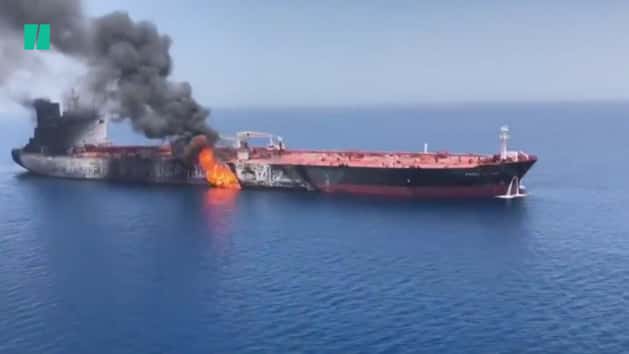
President Donald Trump’s circle defended the president’s plea for other countries to help reopen the Strait of Hormuz, including Michael Waltz, the U.S. ambassador to the United Nation, who said it would “help their own economies.”
Waltz said Sunday on “State of the Union” that the United States will “welcome, encourage and even demand their participation to help their own economies.”
“Meanwhile, the U.S. military will continue to pound the Iranian military at their missile, boat and drone forces to keep the straits open,” Waltz said.
Since the U.S. and Israel launched strikes on Iran, the Straight of Hormuz closed, with threats that Iran will fire on any ship trying to pass. The strait is the world’s most vital oil export route.
When asked about which countries have committed to aiding the U.S., Wright said he wouldn’t speak before the president does, but that “of course the whole world will be united on the need to open Hormuz.”
“The world depends on the flows through Hormuz, and most importantly, the Asian nations: Japan, Korea, China, Thailand, India,” he said. “A meaningful part of their total energy supplies come from the Strait of Hormuz, so of course the whole world will be united on the need to open Hormuz, and clearly, we will have the support of other nations to achieve that objective.”
He said in the “short term,” the U.S. has to end Iran’s “ability to kill American soldiers, terrorize their neighbors and continue to put global energy supplies at risk as they’ve done for 47 years.”
On Saturday, Trump begged other countries to “take care of that passage” for the U.S. so that the world’s oil can pass through.
According to The Financial Times, France and Italy spoke to Iran about a possible safe passage for their ships through the Strait of Hormuz.
Abbas Araghchi, minister of foreign affairs to Iran, told CBS News on Sunday that Iran is “open” to talking to countries “about the safe passage of their vessels.”
“I cannot mention any country in particular, but we have been approached by a number of countries who wants to have a safe passage for their vessels,” Araghchi said. “And this is up to our military to decide, and they have already decided to let, you know, a group of vessels that belong to different countries to pass in a safe and secure. So we provide them security to pass because we have not closed this strait. They are not coming themselves because of the insecurity which is there, because of the aggression by the U.S.”
