

EU freezes US commerce deal after Supreme Court tariff ruling
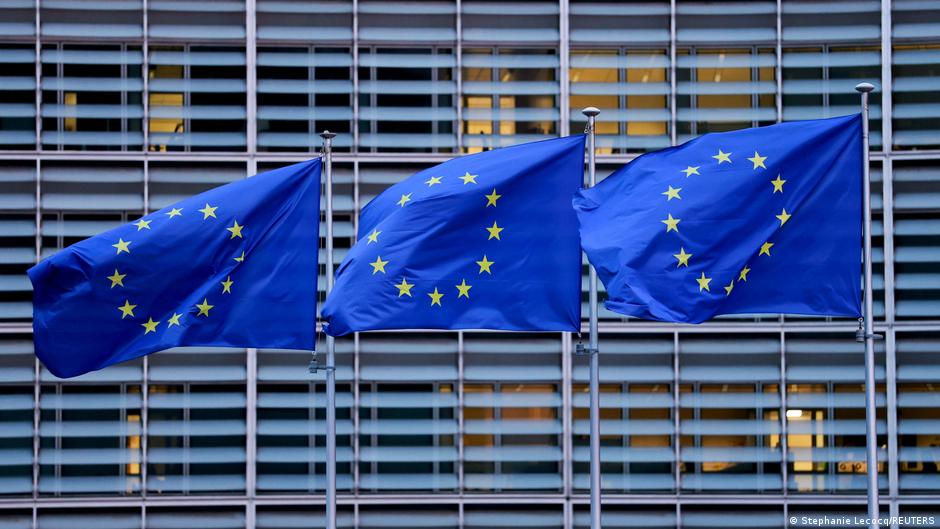
EU lawmakers decided Monday to delay the approval of the bloc’s trade deal with the US due to uncertainty over President Donald Trump’s tariff policy.
It comes after Trump imposed a new blanket 15% duty in response to a ruling in the US Supreme Court last week that struck down many of his previous worldwide tariffs.
The European Parliament’s trade committee planned to vote on Tuesday to remove import duties on US industrial goods — a key part of the EU-US trade deal. But that vote has now been postponed.
European Commission spokesman Olof Gill said Brussels could not take further decisions until it had clarity from Washington.
“We look forward to our American counterparts explaining to us precisely what is happening,” Gill told reporters in Brussels.
What is the EU-US trade deal?
European Commission President Ursula von der Leyen struck a deal with Trump in July last year for a maximum tariff of 15% on most European imports into the US. Brussels also agreed to remove many EU import duties on US goods.
The legally binding deal needs to be approved by the European Parliament and EU governments.
The latest 15% tariffs announced by Trump come into force on Tuesday. They can only remain in place for 150 days unless Congress extends them.
The chairman of the European Parliament’s trade committee, Bernd Lange, said the new US duties could result in the EU potentially facing higher levies on some products, despite the 15% limit agreed under the EU-US deal.
“We want to have clarity from the United States that they are respecting the deal,” Lange said.
EU lawmakers are expected to convene on March 4 to assess if Washington has clarified the situation.
It’s not the first time the approval process has been delayed. EU lawmakers also halted the process last month when Trump threatened to impose extra tariffs on European allies who opposed his goal to annex the Danish territory of Greenland.
What did Germany say?
German government spokesman Stefan Kornelius said Berlin was coordinating closely with its European partners to figure out what kind of US tariffs to expect in the future.
“We also expect the American side to very quickly come up with a clear policy that will enable us to respond,” the spokesman said.
German Chancellor Friedrich Merz is expected to travel to Washington this week to present “a coordinated European position” on Trump’s tariffs.
“If we want to contribute to the stability of our relations and, not least, do industry on both sides of the Atlantic a favor, then we should put an end to these uncertainties as quickly as possible,” Merz said at an event in Berlin on Monday.
He also floated the possibility of using the EU’s “trade bazooka,” an instrument under which access to the bloc’s market can be restricted, as “a final option” in the trade dispute with the US.
“I am confident that we will find a way to resolve these trade disputes without resorting to this instrument,” Merz said. “But if it is necessary, then it is necessary, and I will be the last person to say ‘no.'”
Edited by: Saim Dušan Inayatullah
