

$232,000 to get out: Luxury constitution flights growth as Iran conflict shuts down Middle East air journey
While tens of thousands of ordinary travelers sleep on airport floors or wait out the Iran war in Gulf hotel rooms with no clear flight home, a parallel economy has quietly taken flight — one where the wealthy are paying up to $232,000 to escape the same chaos aboard private jets.
The conflict, which began Saturday, Feb. 28, after U.S. and Israeli forces struck Iran, has triggered the cancellation of more than 12,000 flights across the Middle East since the start of hostilities, according to aviation analytics firm Cirium, as airlines suspended or sharply limited service across the region. President Donald Trump said Monday, March 2, the campaign could last four to five weeks, but potentially “far longer than that.”
Demand for charter flights has skyrocketed, with some people paying up to 200,000 euros ($232,000) as key Gulf hubs curtailed service and airspace closed across the region. Euronews reported that Dubai International and Abu Dhabi’s Zayed International Airport were hit during Iranian strikes over the weekend, while Doha’s Hamad International remained shut because Qatar closed its airspace. Authorities said four people were injured at Dubai International Airport and one person was killed and seven others injured near Zayed International Airport after an intercepted drone fell as debris, according to ABC News.
Travelers from Dubai, usually known as a safe and luxurious destination, are seeking to evacuate by traveling overland either to Muscat, Oman, about a four-hour drive, or to Riyadh, the capital of Saudi Arabia, more than 10 hours away. Then they board one of the few available commercial flights or take a charter flight, whose costs have soared since the start of the war.
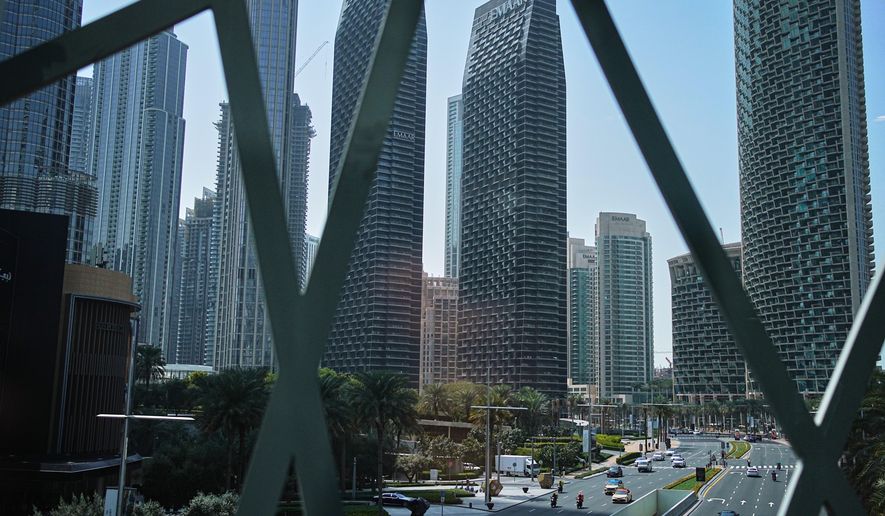
Light traffic moves along a main …
more >
“The demand is huge, and we can’t deliver enough aircraft to respond to the demand,” said Altay Kula, CEO of the France-based private jet broker JET-VIP.
Whereas normally a charter flight on a private jet that can accommodate up to 16 passengers from Riyadh to Porto in Portugal may cost around 100,000 euros ($115,800), these days the cost has doubled, Mr. Kula said.
“This increase in cost reflects the aircraft’s scarcity, the repositioning costs as well, and the operator risk assessments. So this is not speculative pricing,” he added.
Prices can vary depending on the departure point, the type of aircraft and the route constraints, said Ameerh Naran, CEO of Vimana Private Jets. For flights from the Gulf region to Europe, prices are ranging from 150,000 euros ($173,800) to 200,000 euros, he added.
Advertisement
The gap is visible in who can move and who cannot as governments and airlines work through evacuations and limited capacity. More than 58,000 Indonesians remain stuck in Saudi Arabia, where they had been traveling for Umrah pilgrimage during Ramadan, according to PBS NewsHour. About 30,000 German tourists are stranded on cruise ships, in hotels or at closed airports, according to the German Foreign Ministry per PBS.
Qatar alone has reported nearly 8,000 transit passengers trapped due to its ongoing airspace closure, per Euronews. Some 130,000 Britons have registered their presence with the U.K. Foreign Office as of Tuesday, Foreign Secretary Yvette Cooper told Parliament — out of an estimated 300,000 British citizens across the region. Ms. Cooper announced a government charter flight would depart from Muscat “in the coming days” to begin repatriating vulnerable nationals, according to Reuters.
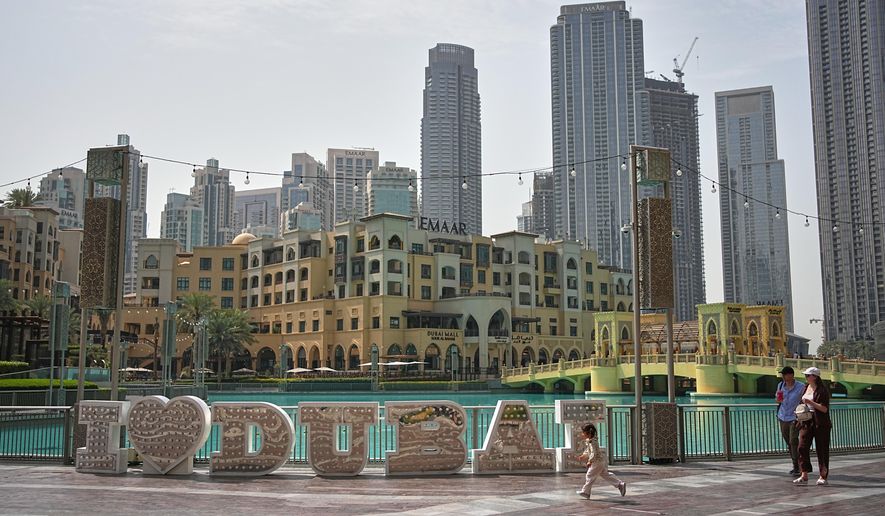
A few people walk in a …
more >
The U.S. State Department on Monday, March 2, urged all Americans in 14 Middle Eastern countries to “DEPART NOW” using available commercial transportation.
READ MORE: Tens of thousands of travelers stranded in the Middle East as Iran war complicates routes home
In order to reach functional airports such as those in Riyadh and Muscat, some travelers hire private security companies that coordinate transportation in vehicles ranging from ordinary passenger cars to coach buses.
Advertisement
Due to the heavy traffic, wait times at border points with Oman can be up to four hours, while costs range in the thousands of dollars, said Ian McCaul, operations and planning director with Alma Risk, a U.K.-based risk management and security firm.
Those seeking to leave are predominantly stranded travelers, as opposed to residents, Mr. McCaul added. He estimates his company has made transfer arrangements for more than 200 people and advised several others in recent days.
Vimana’s clients include business executives, families and entrepreneurs, as well as remote workers who had been based in the region, Mr. Naran said.
With Mr. Trump projecting the military campaign will last four to five weeks — or potentially longer — travel disruptions across the region show no immediate sign of easing. For context, the previous Israel-Iran conflict in June 2025 lasted 12 days.
Advertisement
Associated Press writers Simina Mistreanu and Stefanie Dazio contributed to this report.
